The Mechanical Demands of Hands-Free Pumping
Postpartum apparel occupies a rare intersection of garment design, biomechanics, and daily ergonomics. Unlike standard intimates engineered simply to support breast tissue against gravity, pumping intimates must secure dynamic external hardware. A standard breast pump flange, connector, and collection bottle can weigh anywhere from several ounces empty to nearly a pound when filled with milk. Wearable motors present a different profile, shifting center-of-gravity forward. To keep these devices positioned securely against the skin without requiring continuous manual holding, garments must exert horizontal and vertical holding forces. However, an instinctive assumption among new parents is that tighter fabric creates a more reliable seal. In practice, excessive surface compression introduces distinct physical trade-offs.
Band Tension and Thoracic Mechanics
In ergonomic intimates design, the underbust band provides the foundation for stability, anchoring up to eighty percent of the overall load. Yet postpartum physiology presents specific constraints. The rib cage, having expanded during the third trimester to accommodate fetal growth, gradually shifts over several months. Breathing patterns rely heavily on unrestricted lower thoracic expansion. When a wearer tightens a bra band excessively to counteract the forward pull of heavy pump bottles, the resulting circumferential pressure can cause rib soreness, restrict deep diaphragmatic breathing, and leave deep indentations on sensitive skin. A reliable nursing bra fit guide emphasizes that proper band anchoring relies on even surface contact and firm horizontal grip rather than restrictive squeezing. The band should sit level across the rib cage and allow two fingers to slide comfortably beneath the fabric without slipping upward during motion.
Cup Architecture and Flange Alignment
Beyond band tension, cup architecture dictates whether pump components remain functionally aligned. Successful hands-free expression requires the flange tunnel to stay centered over the nipple, maintaining an even perpendicular angle relative to the chest wall. When an intimate garment relies on flat, uniform compression across the cup, it can flatten the breast profile and force the flange outward, shifting suction distribution unevenly across the areola. Practical nursing bra comfort tips prioritize cups with deliberate three-dimensional depth and multi-directional stretch over stiff flattening panels. Structured cup coverage cradles the breast while allowing the pump flange to seat naturally against the tissue, eliminating the localized friction and skin pinching that frequently accompany overly tight, two-dimensional bra cups.
Accommodating Dynamic Load and Wear Duration
Pumping sessions recur throughout the day, frequently requiring wearers to keep the same garment on for eight to twelve hours across work shifts, infant care, and rest. During this period, breast volume fluctuates substantially between pre-feed fullness and post-expression softening. A garment that feels snug prior to expressing milk may lack adequate tension once the breast empties, causing the collection container to droop. Conversely, a garment sized to hold empty collection vessels firmly might exert uncomfortable pressure when the bust is engorged. Rigid non-stretch materials fail to accommodate these physiological swings. Adaptable designs rely on fabrics engineered for high stretch-recovery ratios, maintaining consistent surface tension across varying chest dimensions without concentrating pressure points along the seams.
Structural Variations Across Postpartum Intimates
An objective nursing bra support comparison highlights varying philosophies in intimate apparel construction. Traditional clip-down nursing bras offer softness and low pressure, but their drop-cup design often lacks the vertical stability needed to hold heavy collection bottles upright. Heavy-duty compression bras with layered neoprene or stiff cotton straps hold equipment firmly, yet their restrictive hand-feel can feel stifling during prolonged indoor wear or warmer weather. A third evolving category incorporates zoned hybrid construction: integrating flexible base textiles with specialized elastic mesh inserts. By distributing tension differentially—firmer along the outer perimeter and more pliable across the central cup—these garments maintain hardware positioning without treating the entire chest as a rigid compression zone.
Design Case: Zoned Elasticity for Fuller Bust Contours
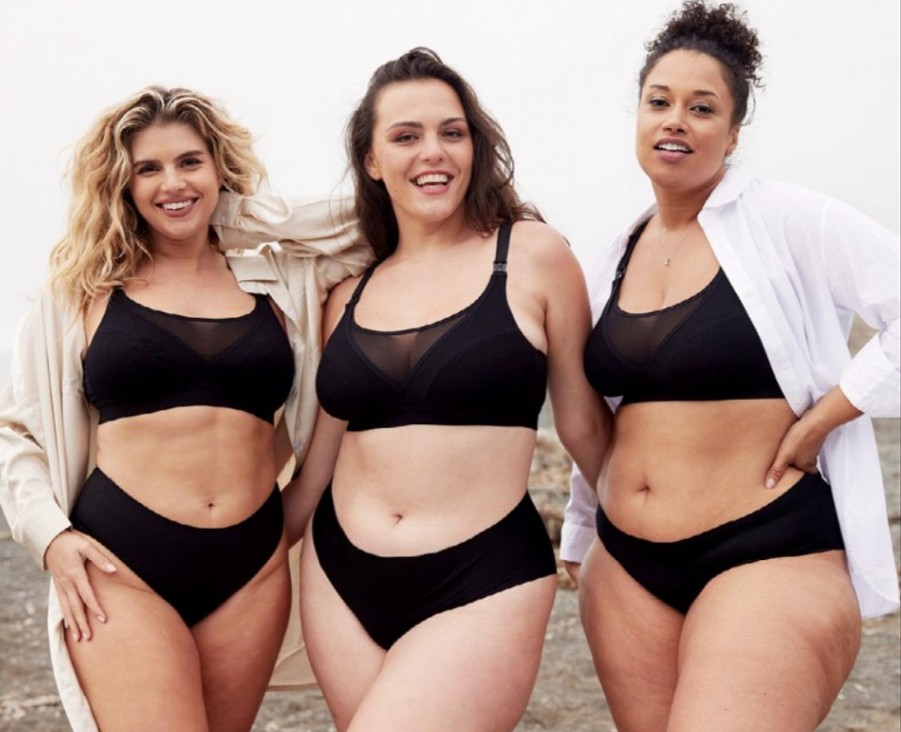
Addressing these fit pressures becomes particularly complex for wearers with fuller busts, where tissue volume and pump weight combine to create substantial downward pull. In this context, brands such asMomcozy Bamboo – Ultra-Soft & Cool Breeze Pumping & Nursing Bra have approached the challenge through specialized garment geometry, as seen in this bra designed for C-to-H cup sizing. Rather than relying on rigid, high-compression fabrics that can dig into the chest wall, the garment combines a breathable elastic mesh overlay with a 92% viscose and 8% spandex base. The elastic mesh acts as an adaptive suspension layer, distributing the weight of standard flanges or wearable pump motors across a broader surface area while accommodating volumetric changes throughout the day. This layered flexibility provides hands-free pumping stability without the restrictive constriction common to single-layer heavy compression pieces.
Sustainable Postpartum Wardrobe Considerations
Choosing intimates for postpartum wear involves recognizing that fit is rarely static. Postpartum physical recovery, hormonal shifts, and changing feeding rhythms mean that garments chosen during the early postpartum weeks will fit differently months later. Prioritizing garments with multi-row hook-and-eye closures, wide adjustable straps, and breathable fiber blends ensures that fit pressure can be adjusted to real-time physical feedback. When support is achieved through balanced geometry and resilient fabric recovery rather than overtightening, daily pumping routines become significantly more sustainable and comfortable for the long term.